Zprávy

Why can three-dimensional wound core transformer achieve low noise and energy saving?

2026-08-22 0 Nechte mi zprávu


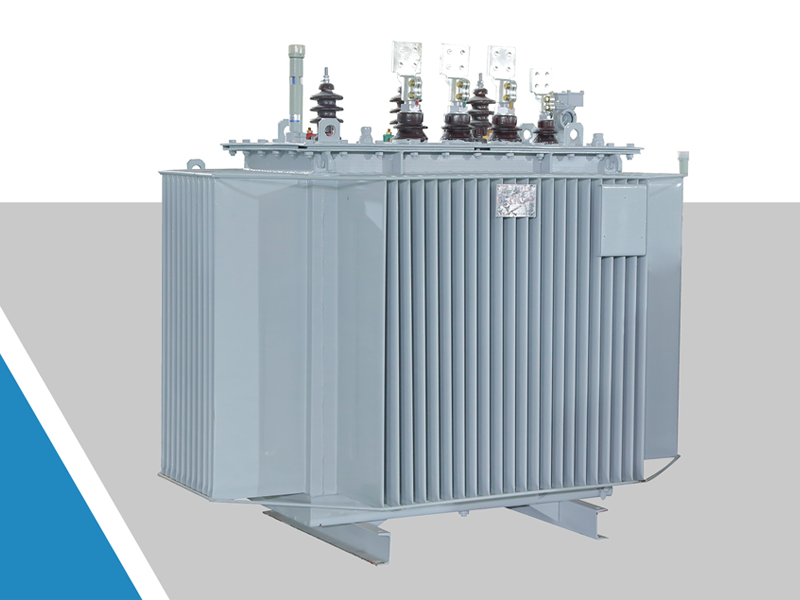
If the traditional transformer is compared to a layered "thousand-feuille cake", then the three-dimensional wound core transformer is like a precision rolled "three-dimensional Rubik's cube". It completely subverts the traditional laminated magnetic circuit structure of transformers, and achieves the ultimate in the two core performances of "energy saving" and "silence" through a unique three-dimensional design.


I. The structural principle of the three-dimensional rolled core: the leap from "flat" to "three-dimensional"

The core of a traditional transformer is made of silicon steel sheets stacked up like bricks. This structure inevitably produces a large number of joints. As for the three-dimensional wound core transformer, the silicon steel strip (or amorphous alloy strip) is continuously and tightly wound on a special machine to form three identical single frames, and finally assembled into a three-dimensional structure that looks like an equilateral triangle when viewed from above.


This structure brings two major inherent advantages:

1. Zero seam design: The entire magnetic circuit is continuous, completely eliminating the air gaps and high magnetic resistance areas caused by seams in traditional iron cores.

2. Perfect symmetry: The lengths of the three-phase magnetic circuits are exactly the same, and the paths are the shortest. The direction of the magnetic flux is highly consistent with the rolling direction of the silicon steel sheet.


II. Core principles of energy saving: from magnetic circuit optimization to material utilization

The energy-saving characteristics of the three-dimensional wound core are essentially the result of the combined effect of the improvement of magnetic circuit efficiency and the release of material performance.


1. No-load loss is greatly reduced

No-load loss (iron loss) is a key indicator of transformer energy efficiency, mainly coming from hysteresis loss and eddy current loss. The three-dimensional wound core reduces iron loss in the following ways:

  • The magnetic circuit is continuous and seamless: The magnetic resistance at the joints of the traditional core is 3 to 5 times that of other areas. The magnetic flux is distorted here, resulting in "local saturation" and additional losses. The closed magnetic circuit of the three-dimensional wound core eliminates seams, distributes magnetic flux evenly, and reduces hysteresis loss by about 20% to 30%;
  • Maximize the utilization rate of silicon steel sheets: The winding process makes the rolling direction of silicon steel sheets completely consistent with the direction of the magnetic circuit (that is, the optimal utilization of "oriented silicon steel"), the magnetic permeability is increased, and the unit loss is reduced;
  • High cross-section filling factor: The cross-section of the rolled core is approximately circular. Compared with the laminated core with rectangular cross-section, the core volume is smaller under the same rated capacity, and the amount of silicon steel sheets is reduced by 10% to 15%, further reducing material loss.


2. Load loss collaborative optimization

Load losses (copper losses) are proportional to the winding resistance and the square of the current. The triangular structure of the three-dimensional wound core provides more compact support for the winding:

  • The winding is directly wound on the wound core column, the concentricity between the core and the winding is higher, the leakage magnetic flux is reduced, and the "eddy current additional loss" in the winding is reduced;
  • After the core volume is reduced, the size of the oil tank can be reduced simultaneously, the length of the winding wires is shortened, the resistance is reduced, and the copper loss is reduced by about 5% to 10%.


III. Core principle of low noise: control from vibration source to propagation path

Transformer noise mainly comes from the vibration caused by the magnetostriction of the core and the electromagnetic force vibration of the winding. The three-dimensional wound core suppresses vibration from the root through structural optimization.


1. Magnetostrictive vibration is “dispersed”

The silicon steel sheet will undergo slight dimensional changes (magnetostrictive effect) in the alternating magnetic field, which is the main source of core vibration. Due to the sudden change in magnetic resistance at the joints of the traditional laminated core, the magnetostriction is uneven and the vibration is amplified; while the closed magnetic circuit of the three-dimensional wound core makes the magnetic flux evenly distributed, the magnetostriction tends to be consistent in all directions, and the vibration energy is dispersed into three symmetrical single frames, and the overall vibration amplitude is reduced by about 30% to 40%.


2. Increased structural rigidity and reduced resonance

The triangular frame of the three-dimensional wound core has natural structural stability:

  • The three single frames are fixed with high-strength adhesive to form an overall rigid structure, which avoids the "beat frequency vibration" caused by the loosening of the laminated core;
  • The contact point between the iron core and the oil tank uses an elastic cushion to block the vibration transmission path and further reduce noise radiation.


Thanks to this, the operating noise of three-dimensional wound core transformers is usually 8 to 13 decibels lower than that of traditional products. Some products can even reach a "silent" state of less than 47 decibels, which is very suitable for noise-sensitive places such as residential areas, hospitals, and data centers.


IV. Summary: Technical value and industry prospects of three-dimensional rolled iron core

Through the structural innovation of "three-dimensional winding, zero joints, and three-phase symmetry", the three-dimensional wound core transformer not only makes the magnetic circuit smoother and more energy-saving, but also eliminates noise sources from the physical structure. It is not only a tool for energy-saving transformation of the power grid, but also an ideal choice for green and environmentally friendly power transmission and distribution systems.


Související novinky
Nechte mi zprávu
X
Používáme cookies, abychom vám nabídli lepší zážitek z prohlížení, analyzovali návštěvnost webu a přizpůsobili obsah. Používáním tohoto webu souhlasíte s naším používáním souborů cookie. Zásady ochrany osobních údajů
OdmítnoutPřijmout