český
- English
- Español
- Português
- русский
- Français
- 日本語
- Deutsch
- tiếng Việt
- Italiano
- Nederlands
- ภาษาไทย
- Polski
- 한국어
- Svenska
- magyar
- Malay
- বাংলা ভাষার
- Dansk
- Suomi
- हिन्दी
- Pilipino
- Türkçe
- Gaeilge
- العربية
- Indonesia
- Norsk
- تمل
- český
- ελληνικά
- український
- Javanese
- فارسی
- தமிழ்
- తెలుగు
- नेपाली
- Burmese
- български
- ລາວ
- Latine
- Қазақша
- Euskal
- Azərbaycan
- Slovenský jazyk
- Македонски
- Lietuvos
- Eesti Keel
- Română
- Slovenski
- मराठी
- Srpski језик

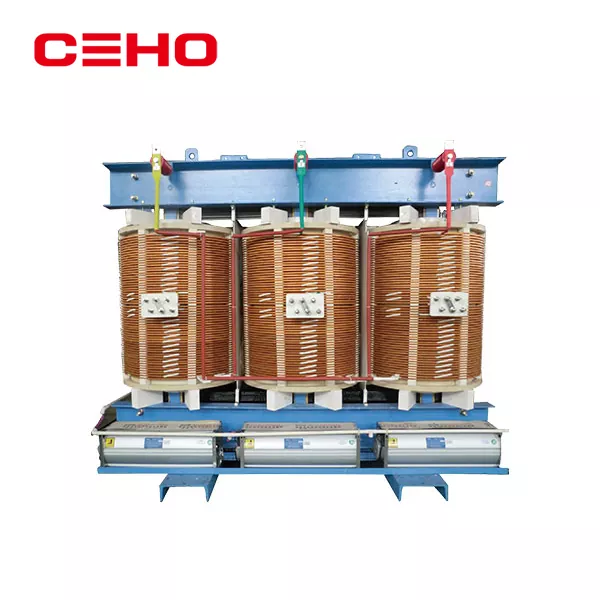
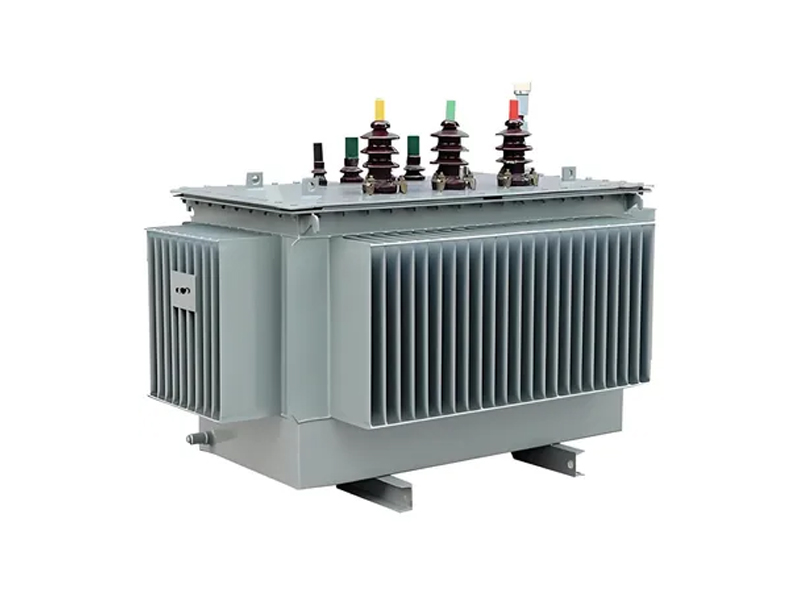
SC(B)10/11/12-10kV(20kV) Epoxy Resin Cast Dry Type Transformer
In urban distribution networks, high-rise buildings, rail transit, data centers and industrial plants, dry-type transformers are gradually replacing traditional oil-immersed transformers as the mainstream choice for "load center" power distribution. Among them, SC(B)10 / SC(B)11 / SC(B)12-10kV (20kV) epoxy resin cast dry-type transformer, as a typical third-generation transitional product under the GB/T 10228 and GB 1094.11 systems, carries the key stage of the transition from "old high energy consumption models" to "new national standard energy-saving models".
I. Core technology and structural characteristics
SC(B) series dry-type transformers adopt advanced vacuum casting technology, the core of which is to pour a thin layer of filled F-class or H-class epoxy resin mixture inside and outside the high and low voltage coils under vacuum and pressure. This process allows the coil to form a solid cylindrical whole after solidification, with extremely high mechanical strength, electrical strength and heat resistance.
In terms of winding design, high-voltage windings are usually made of high-quality oxygen-free copper wires and embedded with resin heat dissipation air channels; low-voltage windings are mostly made of copper foil and combined with glass fiber reinforced materials to make them extremely resistant to short circuits. In addition, the core adopts high-quality cold-rolled silicon steel sheets and a fully oblique joint step-overlap process, which effectively improves the magnetic flux density distribution and significantly reduces no-load loss and operating noise.
This type of product adopts vacuum degassing + pressure thin layer casting process. The high and low voltage coils are integrally encapsulated and solidified by epoxy resin under the reinforcement of glass fiber mat, forming a "reinforced glass fiber reinforced plastic"-like overall stress structure:
- Fire-proof and explosion-proof, no oil pollution: the resin is self-extinguishing and does not leak oil, and can be directly installed in basements, floor power distribution rooms, and crowded areas
- Moisture-proof and anti-corrosion: under 100% relative humidity, it can be restarted directly after shutdown without moisture treatment. It is suitable for subways, tunnels, and coastal salt spray environments.
- Strong short-circuit resistance: foil winding + integral casting, no deformation under short-circuit electric force, high dynamic stability
- Small partial discharge and low noise: after optimizing the magnetic circuit, the operating noise of SCB12 can be controlled within 50dB
- Maintenance-free: no oil changes, no oil chromatography analysis, life cycle operation and maintenance costs are significantly lower than oil transformers
- AN/AF dual-mode cooling: natural air cooling (AN) can be used at full load for a long time; air cooling (AF) can be overloaded up to 120%~150% in a short time
II. Model decoding: What does SC(B)10/11/12 stand for?
According to common naming rules in the industry:
S——Three-phase transformer
C —— Epoxy resin cast insulated dry structure (different from SG open impregnated type)
B——The low-voltage winding is made of copper foil (foil winding, high mechanical strength and good ampere-turn balance)
10 / 11 / 12 —— Design serial number, which is also the no-load loss level code. The larger the number, the lower the loss.
10kV / 20kV——High voltage side rated voltage level, 20kV is mostly used for urban ring network or park dedicated line
(B) can be omitted - no B means low-voltage wire winding, with B means low-voltage foil winding, SCB type is more common in engineering
 The suffix number is not the energy efficiency level of the new national standard, it is just the manufacturer’s design serial number. SCB10 has fallen below level 3 energy efficiency under the new national standard GB 20052-2024, and new projects are prohibited from entering the network; SCB11 also does not meet the standard; SCB12 corresponds to the entry bottom line of the new national standard level 3 energy efficiency (NX3).
III. Comparison of typical parameters of 10kV and 20kV (taking 1000kVA as an example)
|
Model |
Voltage combination |
No-load loss (W) |
Load loss (W) |
Insulation/protection |
New national standard energy efficiency |
|
SC(B)10-1000 |
10±2×2.5%/0.4 |
1770 |
8130 |
Class F/IP20 |
Eliminated (<3 level) |
|
SC(B)11-1000 |
10kV |
1547 | 8130 |
Class F/IP20 |
Not recommended (<3 level) |
|
SC(B)12-1000 |
10kV |
about 1410 | 8130 |
Class F/IP20 |
Level 3 (Admissible) |
|
SC(B)10-1000(20kV) |
20±2×2.5%/0.4 |
— |
— |
Class F |
Eliminated |
Data source: GB/T 10228 sample parameters, SCB11 is about 10%~15% lower than SCB10 at no load, SCB12 is about 20% lower than SCB10 at no load, and the load loss of the three generations is basically the same at the same insulation temperature.
Due to the higher insulation level of the 20kV class (power frequency withstand voltage 50kV, lightning surge 125kV), the number of coil layers, pouring thickness, and creepage distance are all enlarged. The volume and weight ratio of the 10kV class at the same capacity is about 15% to 25%.
IV. Application differences between 10kV and 20kV voltage levels
This series of products covers two mainstream voltage levels of 10kV and 20kV, each with its own emphasis in practical applications:
10kV products: It is currently the most widely used power distribution voltage level, with capacities ranging from 30kVA to thousands of kVA. It is suitable for terminal power distribution in most conventional commercial, industrial and residential areas.
20kV products: As power transformation and distribution products recommended by the State Grid and Provincial Grid, the 20kV voltage level is between 10kV and 35kV. Its core advantages are longer power supply radius, smaller line voltage drop, lower line loss, and can significantly reduce the consumption of non-ferrous metals. 20kV dry-type transformers effectively make up for the shortcomings of 10kV distribution lines, and are especially suitable for large industrial parks, new city development zones and hub substations with long-distance power supply.
V. Excellent safety and environmental adaptability
SC(B) series dry-type transformers are known as "green transformers" and their safety is reflected in multiple dimensions. First of all, insulating materials such as epoxy resin and glass fiber have excellent flame retardant and self-extinguishing properties. They will not produce toxic and harmful gases under short circuit or high temperature, eliminating fire hazards. Secondly, due to the use of solid insulation, the coil does not absorb moisture, and the iron core and clamps have a special anti-corrosion protective layer, allowing it to operate stably in 100% relative humidity and other harsh environments. There is no need to dehumidify before putting into operation or during intermittent operation.
In addition, this series of products has extremely strong overload capability and lightning impact resistance. Under natural air cooling (AN) conditions, it can operate at 120% rated load for a long time; if equipped with a forced air cooling system (AF), the overload capacity can be further increased to 150%, providing sufficient safety margin for sudden large loads.
VI. Typical applicable scenarios
With the comprehensive advantages of flame retardant, explosion-proof, moisture-proof, maintenance-free and can be installed directly in load centers, SC(B)10/11/12 series transformers are widely used in the following places:
- High-rise buildings, commercial complexes, office building power distribution rooms (fire protection zone friendly)
- Subway/light rail stations, tunnels, underground comprehensive pipe corridors (moisture-proof and maintenance-free)
- Hospitals, schools, data centers (low noise, high reliability, better with SCB14+)
- Industrial plants, chemical industry zones, offshore platforms (IP54/H grade custom model resistant to corrosion and salt spray)
- 20kV level is more common in self-operated substations in parks and urban 20kV distribution network pilot areas
To sum up, SC(B)10/11/12 series epoxy resin cast dry-type transformers play an indispensable role in modern power systems with their mature technology, continuously iterative energy efficiency levels and extremely high safety and reliability. As the country's requirements for energy conservation and environmental protection continue to increase, this series of products will surely play greater value in future smart grid construction.
Související novinky
Nechte mi zprávu