Zprávy

What is a three-dimensional wound core transformer?

2026-07-16 0 Nechte mi zprávu


I. What is a three-dimensional wound core transformer?

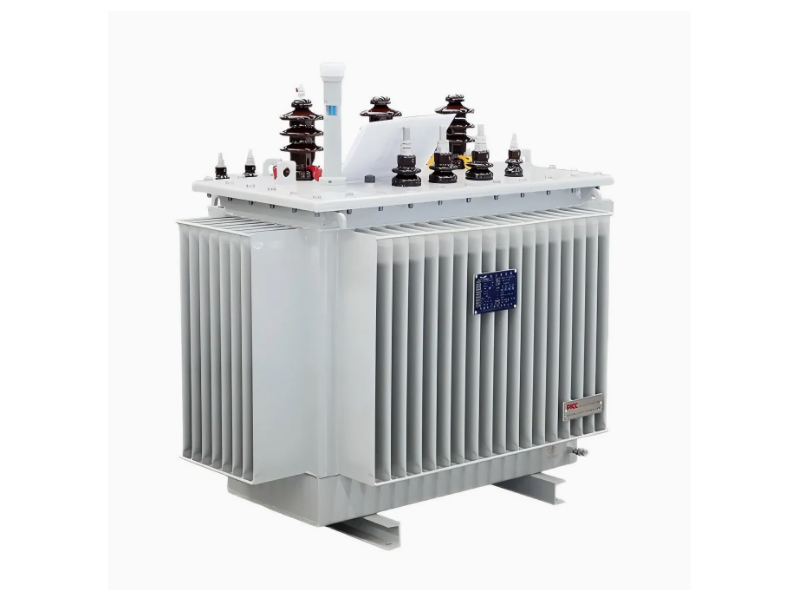
The three-dimensional wound core transformer is an energy-saving power transformer that uses a three-dimensional triangular three-dimensionally arranged wound core as the magnetic circuit. It consists of three single-frame cores with exactly the same geometric dimensions, which are continuously wound on special equipment and then assembled into an equilateral triangle structure. The three-phase magnetic circuit lengths are completely equal and shortest, and there are no seams between layers.


In model naming, it is usually identified by the letter "RL" (such as S13-M.RL-100/10, SCB11-RL-1000/10), where "R" represents the rolled core and "L" represents the three-dimensional structure.


According to insulation and cooling methods, they are mainly divided into:

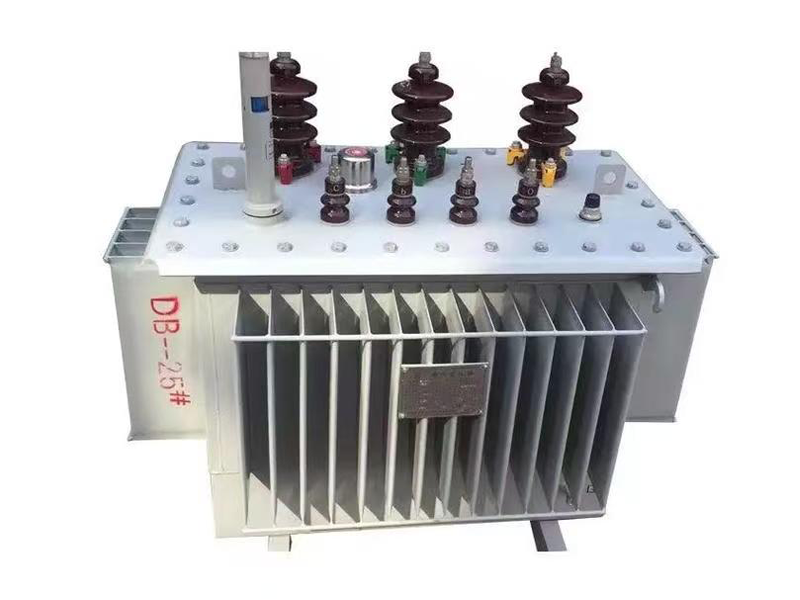
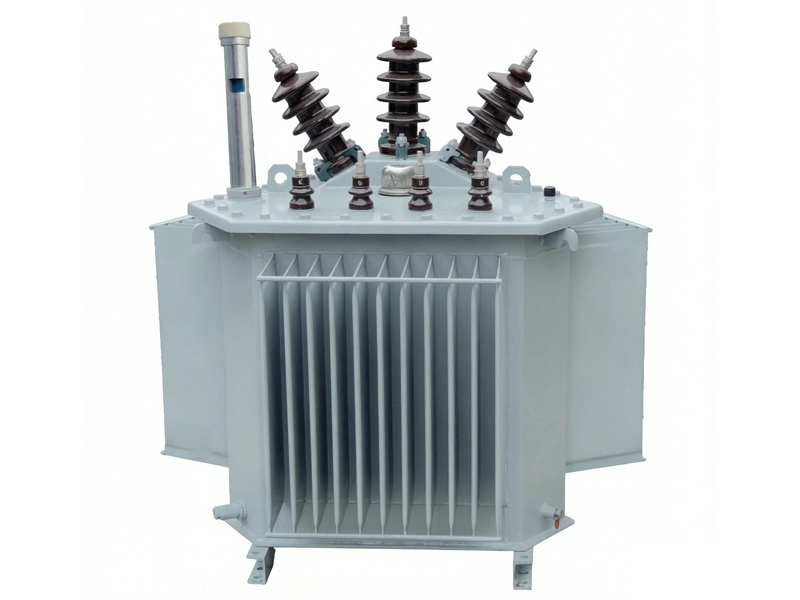
• Oil-immersed three-dimensional wound core transformer (such as S13/S20/S22-M.RL series): suitable for outdoor power distribution, rural power grids, box transformers, etc.

• Dry-type three-dimensional wound core transformers (such as SCB11-RL, SGB11-RL series): including resin-encapsulated and non-encapsulated types, mostly used in indoor, high-rise buildings, subways and other places with high fire protection requirements.


II. Core technical features and advantages

Compared with the traditional planar laminated core, the three-dimensional wound core has achieved systematic optimization in terms of magnetic circuit, loss, noise, structure, etc.:


1. The magnetic circuit is completely symmetrical and has no joint loss.

• The iron core is made of continuously wound silicon steel strips, with no seams or air gaps between layers. The magnetic circuit is evenly distributed throughout, eliminating high resistance areas and magnetic flux distortion.

• The magnetic flux direction is completely consistent with the rolling direction (grain orientation) of the silicon steel sheet, maximizing the magnetic permeability.

• The three-phase magnetic circuit lengths are equal and shortest, and the three-phase no-load currents are balanced, significantly improving power quality.


2. No-load loss and current are significantly reduced

• The iron loss process coefficient is reduced from 1.3~1.5 of the laminated type to about 1.05. This alone can reduce the core loss by 10%~20%.

• The amount of material used in the iron yoke is reduced by about 25%, the weight of the overall iron core is reduced by 18%~25%, and silicon steel sheets are saved by 25%~30%.

• Actual measurement data shows that the no-load loss of the three-dimensional wound core transformer is reduced by 25% to 35% (even up to 50%) compared with the national standard, and the no-load current is reduced by up to 70% to 92%. The energy saving effect is significant.


3. The operating noise is greatly reduced and nearly silent.

Transformer noise mainly originates from magnetostriction of silicon steel sheets and magnetic leakage vibration of joints. Due to the seamless, continuous magnetic circuit and tight structure of the three-dimensional wound core, the vibration is greatly reduced. The operating noise is usually 10~25dB(A) lower than the national standard. Some products can be as low as 40~47dB, making it suitable for noise-sensitive scenes such as residential areas, hospitals, and schools.


4. Good heat dissipation, strong overload capacity and compact structure

• The three-phase coils are arranged in a "pin" shape, with a natural air passage running up and down in the center. The temperature difference is used to generate air convection for efficient heat dissipation, with low temperature rise and strong overload capacity.

• The floor area of the machine body is reduced by 10%~15%, and the height is reduced by 10%~20%. The volume of the box-type substation can be reduced by nearly 1/4, saving installation space.


5. Strong short circuit resistance and high material utilization rate

• The windings are concentrically wound on the three-dimensional frame and are evenly stressed; the clamps are mostly welded into an integrated triangular structure, which can effectively resist the axial and radial stress of sudden short circuits.

• The silicon steel sheets are cut vertically, with a material utilization rate close to 100% and almost no edge waste. The production is material-saving and environmentally friendly.


III. Comparison with traditional laminated transformers


Comparison dimensions 

Three-dimensional wound core transformer 

Traditional planar laminated transformer

Magnetic circuit structure
Three-dimensional triangle, no seams, three-phase complete symmetry
Planar arrangement, seams and air gaps, side phase and center column magnetic circuits are different
No-load loss
Reduce 25%~50%
The benchmark is higher
No-load current
Reduce 70%~92%
relatively large
Operating noise
Low 10~25dB(A), can be lower than 50dB
Usually above 60dB
Material usage
Silicon steel sheets save 25%~30%, copper wires save 5%~8%
The iron yoke is redundant and the waste is about 5%
Volume weight
18%~25% lighter, small footprint
Heavier and takes up a lot of space
Manufacturing and repair
Automatic winding, stable quality; but integration is difficult to dismantle and repair
Mature technology, disassembly and assembly, flexible maintenance
Applicable scenarios

Urban network, residential area, new energy, standardized station area

Scenarios where rural power grids are dispersed across Taiwan areas, have large capacity, and require frequent modifications


Generally speaking, the three-dimensional wound core has obvious advantages in energy efficiency, noise, and volume; the laminated core still has room for application in large-volume manufacturing and flexibility in later disassembly and maintenance.


IV. Main application areas and market prospects

1. Typical application scenarios

• Urban and rural distribution network: Residential areas, commercial centers, street power distribution, taking advantage of its low noise, energy saving, and small footprint.

• Public and infrastructure: high-rise buildings, hospitals, schools, subways, airports, stations and other places with high noise and safety requirements.

• New energy and industry: Photovoltaic and wind power grid connection, data centers, industrial and mining enterprises, oil drilling platforms, etc.

• Box-type substations and rural power grids: compact structure suitable for box-type substations, fully sealed and moisture-resistant, suitable for rural areas and areas with harsh environments.


2. Market development trends

Driven by energy efficiency improvement policies and green transformation, the penetration rate of three-dimensional wound core transformers continues to increase. At present, the products have covered voltage levels of 10kV~110kV and capacities of tens of kVA to tens of thousands of kVA, and are expanding towards intelligence (integrated remote monitoring), amorphous alloy three-dimensional wound cores, and large-scale. It is expected that the domestic three-dimensional wound core transformer market will maintain double-digit compound growth and become one of the mainstream selections for distribution network transformation.


V. Selection summary and conclusion

The three-dimensional wound core transformer is not a simple "replacement of structure", but a system energy-saving innovation based on the nature of the magnetic circuit: a continuous and seamless three-dimensional magnetic circuit is exchanged for lower loss, less noise and more compact size, and the whole life cycle (TCO) operating cost is significantly lower than that of traditional products.


Selection suggestions:

• If the project is located in the core area of the city, a densely populated area, a noise-sensitive area or a new standardized area, priority will be given to the first/secondary energy-efficient three-dimensional wound core transformer;

• If the rural power grid is dispersed in a station area, has a large capacity (such as some scenarios above 315kVA), and requires flexible modification at a later stage, the laminated solution can be evaluated based on cost and maintenance requirements.


As the manufacturing process matures and economies of scale emerge, the full life cycle economics of three-dimensional wound core transformers will be further highlighted, playing a key role in the low-carbon transformation of electric power.


Související novinky
Nechte mi zprávu
X
Používáme cookies, abychom vám nabídli lepší zážitek z prohlížení, analyzovali návštěvnost webu a přizpůsobili obsah. Používáním tohoto webu souhlasíte s naším používáním souborů cookie. Zásady ochrany osobních údajů
OdmítnoutPřijmout